 Skip-the-line available
 Saint-Denis and the Panthéon: Paris's Two Great Resting Places
The royal necropolis and the national mausoleum — how they compare, and how to see both in one Paris day.
France remembers its dead in two great places, and together they tell the whole story of the nation. Saint-Denis, north of Paris, is the royal necropolis — the tombs of the kings and queens. The Panthéon, in the Latin Quarter, is the mausoleum of the Republic — Voltaire, Rousseau, Victor Hugo, Marie Curie. This guide compares the two and shows how to pair them into a single, resonant Paris day that runs from the monarchy to the Republic.
Two Ways a Nation Remembers
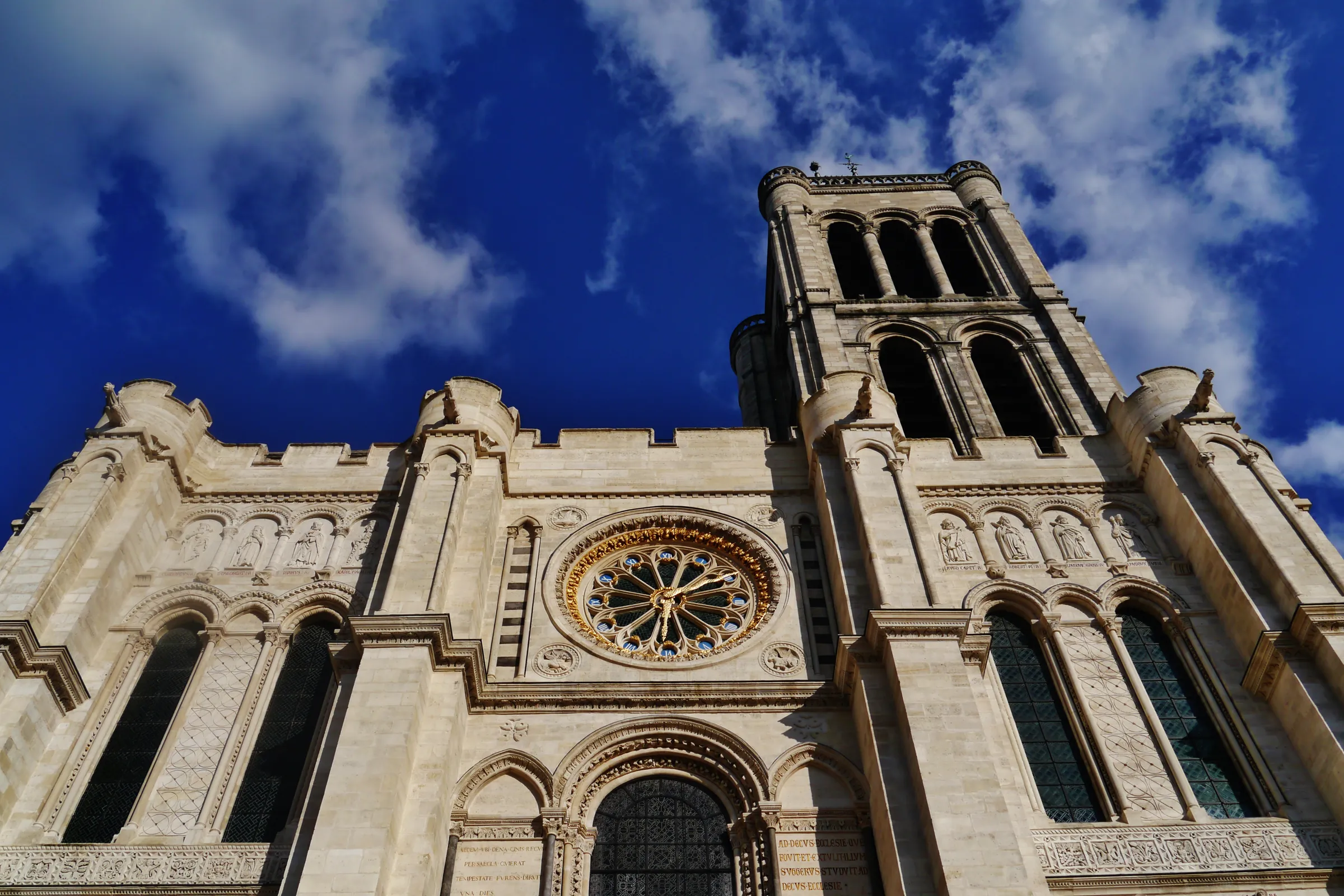
Saint-Denis and the Panthéon are the two poles of French memory. For more than twelve centuries Saint-Denis was where the monarchy buried its kings and queens, and its choir holds the largest collection of royal tombs and gisants in Europe. The Panthéon, begun as a church and turned by the Revolution into a secular temple, holds the great figures the Republic chose to honour — writers, scientists, thinkers and resistance heroes — beneath its vast dome.
Visiting both is a way of reading French history from both ends: the sacred, dynastic memory of the old monarchy at Saint-Denis, and the civic, republican memory of modern France at the Panthéon. One is Gothic and medieval, the other neoclassical and Enlightenment; together they frame the nation's whole idea of who deserves to be remembered.
How They Compare
Saint-Denis is the older and, architecturally, the more historic: the birthplace of Gothic, with a choir full of royal tombs spanning a thousand years, in a quieter setting north of the city. The Panthéon is grander in a different key — a soaring 18th-century dome, Foucault's pendulum swinging in the nave, and the crypt of the Republic's heroes below. Each takes about an hour to an hour and a half to visit.
Neither is a substitute for the other; they are complements. If you love medieval art and French royalty, Saint-Denis will move you most; if you are drawn to the Enlightenment and modern France, the Panthéon will. Seeing both, ideally in that order — monarchy first, Republic second — gives the day a natural historical arc.
Doing Both in One Day
The two are easy to pair despite being on opposite sides of the city. A comfortable plan is to visit Saint-Denis in the morning — an open-dated necropolis visit, around 20 to 25 minutes out on Métro line 13 — then return to the centre and cross to the Latin Quarter for the Panthéon in the afternoon. Because the Panthéon uses timed entry while the Saint-Denis ticket is open-dated, fix your Panthéon time first and let the flexible Saint-Denis visit fit around it.
Both are compact, indoor visits, so the day works in any weather, and each is far calmer than the busiest central-Paris monuments. We can help arrange both bookings so they dovetail — the royal necropolis and the national mausoleum, the kings and the citizens, in a single, thoughtful day in and around Paris.
Frequently asked
What is the difference between Saint-Denis and the Panthéon?
Saint-Denis is the royal necropolis — the burial place of the kings and queens of France. The Panthéon is the mausoleum of the Republic's great figures, such as Voltaire, Rousseau, Victor Hugo and Marie Curie. Together they tell the whole story of French memory.
Can I visit both in one day?
Yes, easily. Visit Saint-Denis in the morning on your open-dated ticket (about 20–25 minutes out on line 13), then visit the Panthéon in the Latin Quarter in the afternoon. Because the Panthéon is the timed visit, fix its time first and let the flexible, open-dated Saint-Denis ticket fit around it.
Which should I see first?
Monarchy first, Republic second gives the day a natural historical arc — Saint-Denis and its royal tombs in the morning, the Panthéon and the Republic's heroes in the afternoon.
How long does each take?
Each takes roughly an hour to an hour and a half. Both are compact, indoor visits, so the pairing works comfortably in a single day and in any weather.
Are they close together?
No — Saint-Denis is north of the city and the Panthéon is in the Latin Quarter, but both are well connected by Métro, so pairing them in one day is straightforward with a little planning.
Can you book both for me?
Yes — we can arrange both visits so the timings dovetail into a single day. Tell us your preferred date and we will make sure the Saint-Denis and Panthéon slots work together.