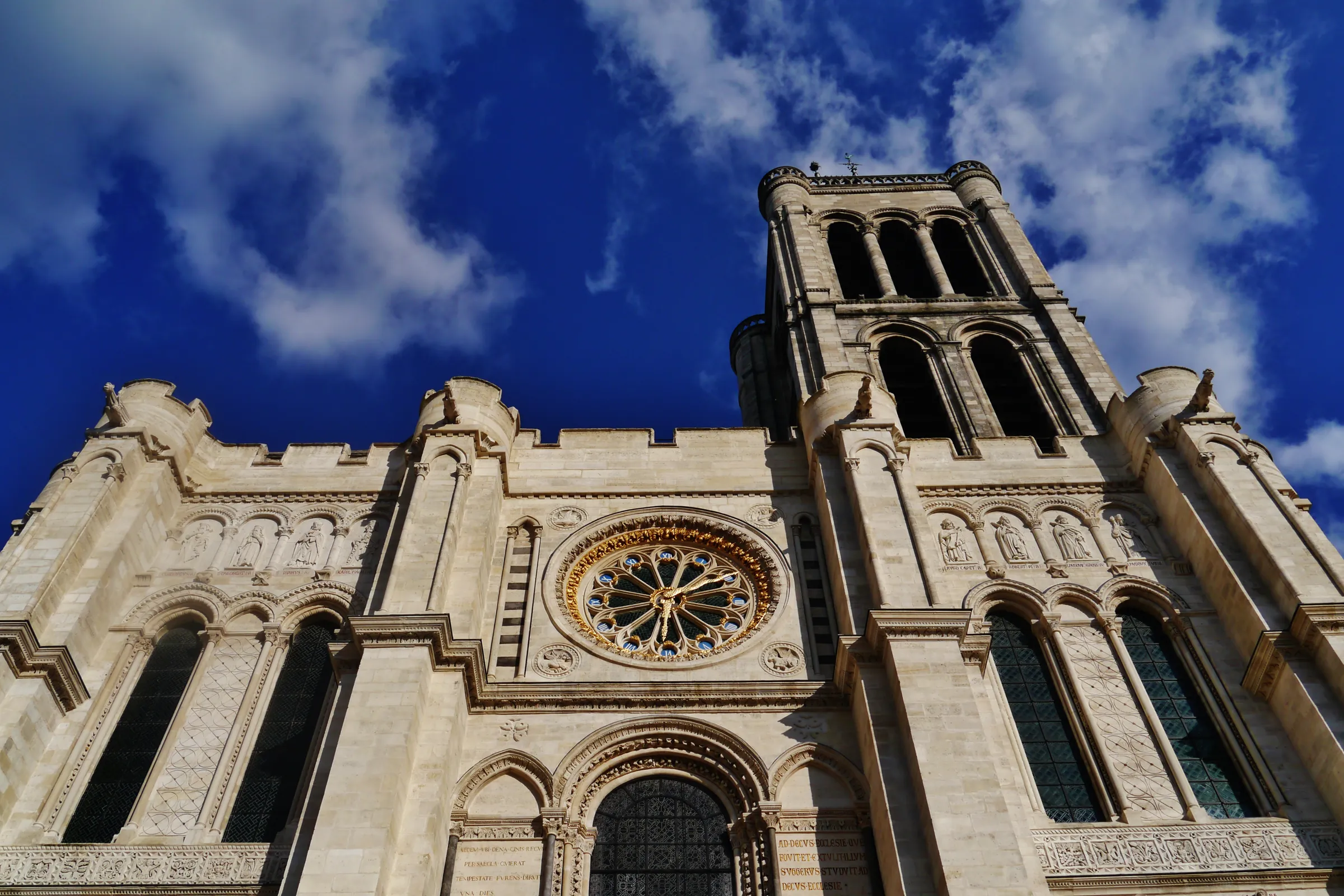
 Skip-the-line available
 The Best Time to Visit the Basilica of Saint-Denis
A guide to choosing your day, the quietest times, the best light for the stained glass and tombs, and why Mondays are different.
The Royal Necropolis of Saint-Denis is calm inside whenever you come, and the ticket is open-dated — so the real questions are which day to choose, which are easiest, and when the stained glass and marble tombs look their best. Because the visit is almost entirely indoors, it is also one of the best sights near Paris for a rainy day. This guide covers the daily and weekly rhythm, the seasons, the light, and the one thing to know about visiting on a Monday.
How the Open-Dated Ticket Works
Entry to the Royal Necropolis is by open-dated ticket: there is no fixed date and no fixed time. Your ticket is valid on any open day — Tuesday to Sunday — for 12 months from purchase, so you simply arrive during opening hours, skip the ticket queue and are admitted straight away. Once inside there is no time limit — you follow the route through the choir, the royal tombs, the crypt and the Fabrique de la flèche at your own pace, and most visitors take between an hour and an hour and a half. The choir never feels crowded, which is a large part of the appeal.
The busiest times are the popular late-morning and early-afternoon hours, and weekends in high season. If you value a quieter visit and easier photographs, come early in the day or on a weekday; because the ticket is open-dated, you can pick whichever day suits you. A concierge booking prepares your open-dated ticket and delivers the e-ticket in advance.
Seasons, Quiet Days and Rainy-Day Appeal
The Royal Necropolis is open every day except 1 January, 1 May and 25 December, so there is little to plan around, but weekday visits outside French school holidays are the calmest and easiest to book. Weekends and holiday periods see the most demand for slots, especially in spring and summer. Opening hours are longer from April to September (closing at 17:45) and shorter from October to March (closing at 16:45), with last admission 30 minutes before.
Because almost the entire visit is under cover, Saint-Denis is a reliable choice in poor weather, when the outdoor monuments of Paris are less rewarding. A wet or grey day is arguably the ideal time to come: the choir, the tombs and the crypt are unaffected, and you can keep any sunshine for the town and the market square outside.
Why Mondays Are Different
One quirk is worth knowing: the Fabrique de la flèche — the workshop rebuilding the basilica's spire — is closed on Mondays, while the Royal Necropolis itself stays open. If watching craftsmen raise a Gothic spire by hand is high on your list, choose any day but Monday. If your priority is the tombs and the choir, a Monday visit is perfectly good and often a little quieter.
Access to the necropolis can also pause briefly during religious services in the basilica, since the nave remains a working church. It is rarely a long interruption, but if you are on a tight schedule it is worth allowing a little flexibility on the day, and our team can advise on the current service times when you book.
Light, the Stained Glass and Photography
The signature images of Saint-Denis are the coloured light falling through Suger's ambulatory windows and the ranks of white-marble gisants and Renaissance tombs in the choir. They are at their most luminous in the strong daylight of late morning to early afternoon, when the sun reaches the great windows. Overcast light is softer and can suit the tombs, but the stained glass sings on a bright day.
Inside, photography for personal use is permitted without flash or tripod, and the choir, the effigies and the towering Renaissance monuments all reward careful framing. As the route is self-paced, you can wait a moment for a group to move on before you shoot, and please be discreet if a service is under way in the free nave.
Frequently asked
What is the best time of day to visit Saint-Denis?
Late morning to early afternoon is ideal — that is when the sun reaches Suger's stained glass and the white-marble tombs are at their most luminous. The first slots of the day are the quietest around the entrance.
Which days are quietest?
Weekdays outside French school holidays are the calmest and easiest. Weekends and holiday periods are the busiest, especially in spring and summer.
Why should I avoid a Monday?
Only if the Fabrique de la flèche spire workshop matters to you — it is closed on Mondays, though the Royal Necropolis with its tombs and choir stays open. For the tombs alone, a Monday is fine and often quieter.
Is Saint-Denis good for a rainy day?
Ideal. The visit is almost entirely indoors — the choir, the tombs and the crypt — so it is unaffected by weather, making it one of the best wet-day choices within reach of central Paris.
Do I need to book a specific time?
No — the ticket is open-dated, with no fixed date or fixed time. It is valid on any open day (Tuesday to Sunday) for 12 months from purchase, so you just arrive during opening hours; your e-ticket lets you skip the queue, and once inside you can take your time.
What are the opening hours?
Apr–Sep: Mon–Sat 10:00–17:45, Sun 12:00–17:45. Oct–Mar: closing an hour earlier at 16:45. Last admission is 30 minutes before closing, and it is closed on 1 January, 1 May and 25 December.
How long should I allow?
About 1 to 1.5 hours for the Royal Necropolis, the crypt and the Fabrique de la flèche. Lovers of Gothic architecture or French history often stay longer, so give yourself a little extra if you can.